
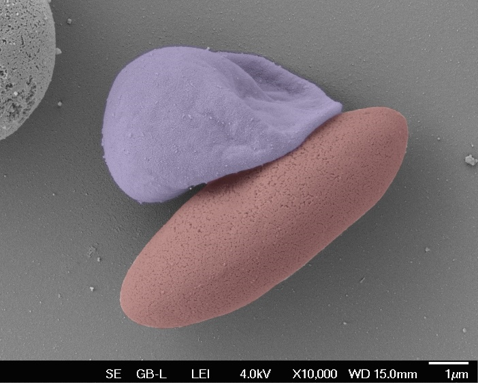
As part of ParaFishControl Work Package 1 (Host-parasite interactions), the Biology Centre of the Czech Academy of Sciences (BCAS) studies host exploitation of common carp by the myxozoan, S. molnari. This parasite’s blood stages are highly motile and multiply rapidly in the blood of carp, requiring substantial amounts of energy. We observed the attachment of S. molnari to carp erythrocytes and their gnawing on the host cells (Figure 1).
We confirmed the transfer of proteins from the host cells to parasite and demonstrated that this carp parasite can cause hemolytic anemia, significantly reducing the number of red blood cells in the host (Figure 2), which are urgently required for oxygen transport. This is of special importance for Central European common carp cultures in the summer months, where high temperatures, algal blooms and deteriorated water quality reduce oxygen levels in the ponds and can cause significant mortalities in carp stocks. We have recently discovered the main proteolytic enzyme that S. molnari uses for the degradation of host proteins, and consider it an important target for future vaccination development.
