Functional Feed Additives
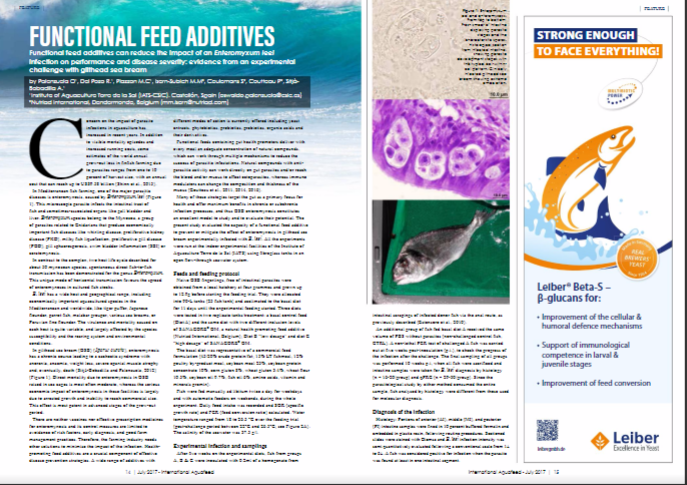
Feature article about collaborative research of ParaFishControl and Nutriad International on functional feed additives in the “International Aquafeed” magazine, July edition 2017, pages 14-19.
Published: 28.07.2017

Published: 28.07.2017
Parasites from the family Anisakidae are widely distributed in marine fish populations worldwide and mainly nematodes of the three genera Anisakis, Pseudoterranova and Contracaecum have attracted attention due to their pathogenicity in humans. Human consumption of raw or underprocessed seafood containing third stage larvae of anisakid parasites may elicit a gastrointestinal disease (anisakidosis) and allergic responses. Excretory and secretory (ES) compounds produced by the parasites are assumed to be key players in clinical manifestation of the disease in humans, but the molecules are likely to play a general biological role in invertebrates and lower vertebrates as well. ES products have several functions during infection, e.g. penetration of host tissues and evasion of host immune responses, but are at the same time known to elicit immune responses (including antibody production) both in fish and mammals. ES proteins from anisakid nematodes, in particular Anisakis simplex, are currently applied for diagnostic purposes but recent evidence suggests that they also may have a therapeutic potential in immune-related diseases.
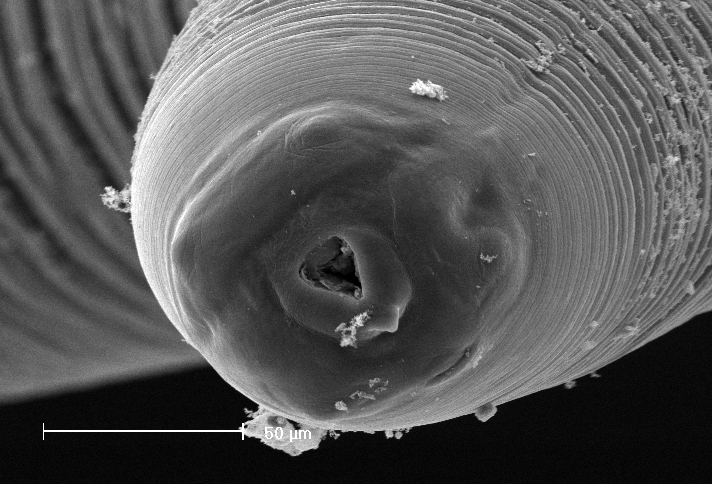
Anisakis simplex ©Wikimedia Commons, Anilocra
Published: 27.07.2017
Proliferative kidney disease (PKD) is a parasitic infection of salmonid fish characterized by hyper-secretion of immunoglobulins in response to the presence of the myxozoan parasite, Tetracapsuloides bryosalmonae. In this context, we hypothesized that the BAFF/APRIL axis, known to play a major role in B cell differentiation and survival in mammals, could be affected by the parasite and consequently be involved in the apparent shift in normal B cell activity. The results presented in this paper support the premise that the BAFF / APRIL axis plays an important role during PKD, which may open the possibility of new therapeutic treatments against the disease.

Rainbow trout © Kurt Buchmann, University of Copenhagen, Denmark
The current study is the first to describe the full sequences of the soluble and membrane-bound forms of Gilthead sea bream IgM and IgT and shows for the first time in a fish model their differential expression in different tissues, upon challenge with different pathogens and infection routes.
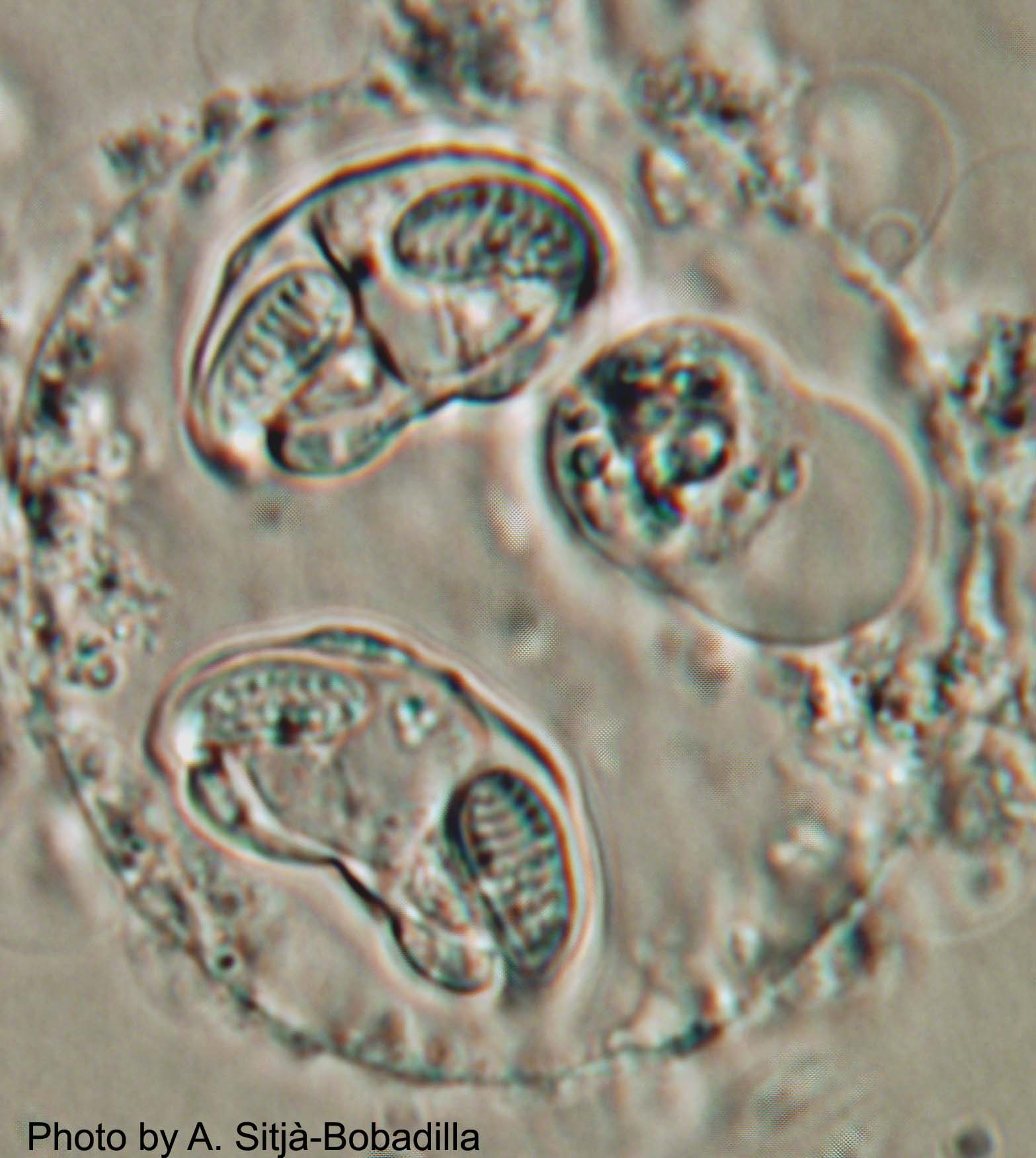
E. leei ©A Sitjà-Bobadilla
Three different immunoglobulin (Ig) isotypes can be found in teleost fish, IgM, IgD, and the teleost-specific IgT. It is widely accepted that IgM expression is dominant in absolute terms in all organs and is essential for immune protection against different pathogens upon different routes of infection. IgT, despite being generally less abundant than IgM in number of transcripts and cells, is undeniably crucial in mucosal immune responses, but its role in systemic responses and the role of IgM in mucosal responses should not be discarded. Gilthead sea bream (Sparus aurata) is a marine species belonging to the Sparidae family (Teleostei: Perciformes). It is the main farmed fish species in the Mediterranean basin, representing an important resource for this area. Several diseases hamper their production, and therefore, any advancement in the knowledge of its immune response will help to combat diseases.
This study found that
–> constitutive expression of sIgM was the highest overall in all tissues, whereas mIgT expression was highest in mucosal tissues, such as gills and intestine.
–> IgM and IgT were differentially regulated upon infection.
–> plant-based diets inhibit IgT upregulation upon intestinal parasitic challenge, which was related to a worse disease outcome.
The authors corroborate the importance of IgT in mucosal responses in a fish species very different to the ones used in most previous IgT studies (salmonids and cyprinids). The current results clearly show that the dynamics of expression of IgM and IgT are very different and depend on the types of pathogen or stimulation, immunization, challenge (intramuscular, anal, bath), tissues, and time after challenge. Finally, the authors propose the fish–E. leei infections and the different dietary interventions as models to further study and unravel the insights of the different Ig isotype functions in teleost fish.
INFOBOX: An antibody, also known as an immunoglobulin (Ig), is a large, Y-shaped protein produced mainly by plasma cells that is used by the immune system to neutralize pathogens such as bacteria and viruses. The antibody recognizes a unique molecule of the harmful agent, called an antigen.