European researchers tackle parasitic diseases in Europe’s farmed fish

Press release: December 2016

Parasitic diseases which affect fish species can significantly hamper aquaculture production and economic performance. ParaFishControl is a European Union funded research project addressing the challenges of disease prevention and management to protect the sustainability and competitiveness of the European aquaculture industry. In September, over 70 researchers involved in ParaFishControl, from 13 European countries as well as Canada, came together in Copenhagen, Denmark, to discuss their latest research findings and to map out their future research strategies. Their task – to improve understanding of fish-parasite interactions and to develop respective management tools. For example: diagnostic tests, vaccines, risk maps, and best practice handbooks and management manuals for the prevention, control and mitigation of the most harmful parasitic species affecting key European farmed fish species.

ParaFishControl Project Coordinator Dr Ariadna Sitjà-Bobadilla, from Agencia Estatal Consejo Superior de Investigaciones Cientificas (CSIC), Spain explained: “This has been an exciting time for ParaFishControl! The project is only in its initial stages, but we have already made significant progress and published 11 scientific papers. The ParaFishControl published research includes: the effects of nematode worms on fish and consumer health, the role of fungal communities as suppressors of other fungi, and the decrease in intensity of infection of a gill parasite of gilthead sea bream after feeding infected fish with a mixture of compounds. We have also described, for the first time in Europe, a two-host life cycle of a parasitic myxozoan species and we have comprehensively reviewed the “macrophages first” hypothesis for polarized immune responses”.

“Another partner, the University of Santiago de Compostela (USC), has been working on turbot scuticociliatosis, a disease caused by protozoans, which has been recognized as an emerging problem, inflicting significant economic loss in the global aquaculture industry, by affecting different fish species. Researchers at USC have discovered that the antimalarial drugs chloroquine and artemisinin as well as the chemical substance curcumin which is produced by some plants inhibit some enzymes of this parasite. These findings highlight potential for treating this disease in aquaculture” Dr Sitjà-Bobadilla added.

For a list of all publications, please visit: www.parafishcontrol.eu/parafishcontrol-results2

ParaFishControl, funded by the European Union’s Horizon 2020 funding programme, has been going on since April 2015 and will continue until 2020. In that time, ParaFishControl will carry out a variety of activities to ensure the research findings are shared with a variety of stakeholders such as scientists working in academia or industry, fish farmers/growers, fish health professionals, agricultural advisors, breeders, consumers and policy makers as well as the general public.

For more information, please visit www.parafishcontrol.eu or follow us on Twitter: @parafishcontrol

Contact us:
ParaFishControl Coordination and Management:[email protected], supported by: [email protected]
ParaFishControl Communication and Press: [email protected]
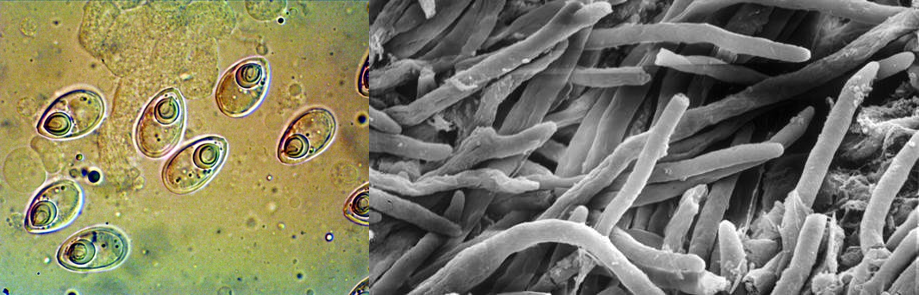
parasite images
(Left) Thelohanellus sp. © Csaba Szekely, (right) Saprolegnia sp. © Kurt Buchmann
ParaFishControl Expert consultation on Mediterranean fish parasites

We would like to thank all the Mediterranean Aquaculture industry experts that participated in the ParaFishControl Project Expert consultation on Mediterranean fish parasites in Residència d’Investigadors, Hospital, 64 Barcelona on the 10th – 11th November 2016 for a very interactive, open and productive meeting!     

ParaFishControl Parasite Experts prepared the Literature reviews. CEFAS with CSIC, AQUARK and Parasite Leaders developed questionnaires on disease characteristics, incidence and prevalence, impact of farm characteristics and environmental factors, pathways for parasite introduction, impact of management practices, treatment strategies and mixed infections. Mediterranean Experts were invited and filled the questionnaires and after CEFAS analysed the responses industry experts were invited to review the results and discuss each parasite profile in the expert consultation meeting.

ParaFishControl partners along with Mediterranean industry fish pathologists discussed the impact of four of the most important parasites in the Mediterraenan mariculture industry.

  • Sparicotyle chrysophrii (Gilthead Seabream)  
  • Enteromyxum leei (Gilthead Seabream)
    • Ceratothoa oestroides (European seabass)
    • Amyloodinium ocellatum (European seabass)

We had a great opportunity to exchange information and discuss the ParaFishControl questionnaire in order to put together different pieces of the puzzle to improve our understanding of the parasites and their impact to the industry.

The meeting was organized by Ariadna Sitjà-Bobadilla (CSIC) – PARAFISHCONTROL Coordinator and Panos Christofilogiannis (AQUARK) – ParaFishControl Industry Forum Leader with the contribution and participation of the following experts: Birgit Oidtmann (CEFAS), Oswaldo Palenzuela (CSIC), Ivona Mladineo (IZOR), Marialetizia Fioravanti (Un. BOLOGNA), Paola Beraldo (Un. UDINE), Albert Girons (ICTIOVET), Elena Planas Callao (BIOMAR), Foteini Athanasopoulou (Un. THESSALY), Anastasia Dourala (SELONDA Group), Carlos Zarza (ARC SKRETTING), Francesc Padros (Un. AUTONOMA BARCELONA), Kantham Papanna (NIREUS Group), Meritxell Diez (Grupo CULMAREX), Ioannis Petropoulos (ANDROMEDA Group), Georgios Spiliopoulos (ANDROMEDA Group), Alastair Cook (CEFAS), Panos Varvarigos (VETCARE), Maria Mercè Isern I Subich (NUTRIAD International) and Daniel Gijón (SKRETTING SPAIN)

We all expressed our will to continue this active collaboration throughout the ParaFishControl project where we plan to interact with all the stakeholders through epidemiological studies, fish farm visits, economic impact assessment to finally develop guidelines for integrated pest management practices to better manage parasitic diseases in Mediterranean mariculture.  
Join our LinkedIN Group to follow the progress of this work in www.linkedin.com/groups/8429051

ParaFishControl (www.parafishcontrol.eu) has received funding from the European Union’s Horizon 2020 research and innovation programme under grant agreement No 634429. This output reflects the views only of the author(s), and the European Union cannot be held responsible for any use which may be made of the information contained therein.

First ParaFishControl Annual Meeting, Sep 2016, Copenhagen, Denmark

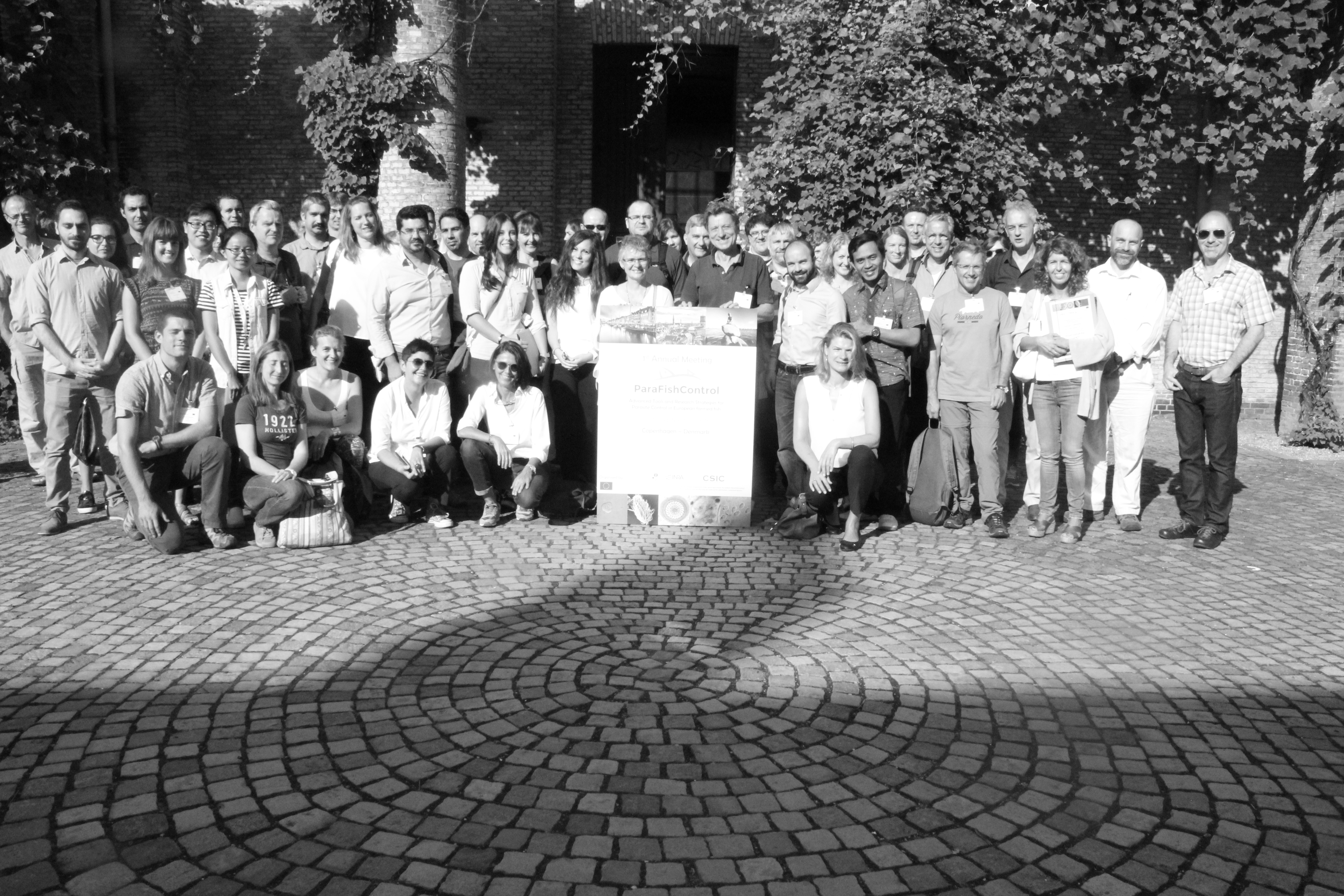
On 12-15 September 2016, the ParaFishControl consortium met at its first Annual Meeting in the beautiful city of Copenhagen, Denmark to discuss their innovative ideas and progress during the first 1.5 years as part of the ParaFishControl project. Over 70 researchers from 13 European countries and Canada got together.

The meeting started with a session of the Executive Committee (Work Package leaders), followed the next morning by the official welcome of meeting participants by project coordinator Dr. Ariadna Sitjà-Bobadilla (CSIC) “This has been an exciting year for ParaFishControl! We have already made significant progress in achieving the aims of various tasks in the project.” 

During the following sessions, every work package reported on their activities and achievements and opened the floor for further discussions with all partners. Additionally, small working groups enabled targeted discussions within specific topics. 

The Annual Meeting was organised by Prof. Kurt Buchmann and his team from the University of Copenhagen, who kept everyone happy and well caffeinated.

1st PFC CPH c Rezgar

2-Day Workshop on health in Pangasius and Tilapia farming at the University of Copenhagen in November 2016. Register now, for free!

DAFINET (Danish Fish Immunology Research Center & Network) WORKSHOP – Pangasius and Tilapia production: Upgrading Fish Health and Value Chains

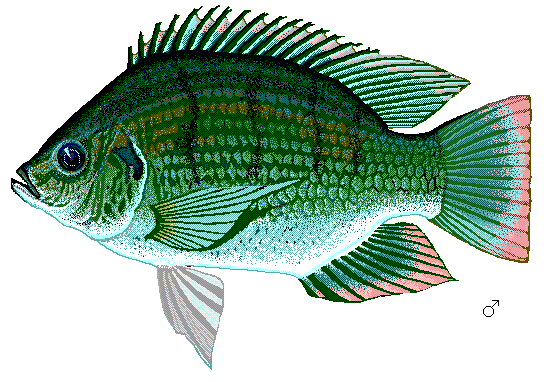
mango tilapia wiki

This workshop is organised by one of ParaFishControl’s partners, the University of Copenhagen.

Dates: November 8th and 9th, 2016
Time: 10:00 to 17:00
Venue: University of Copenhagen – Grand Lecture Theatre, Auditorium A1-1.01, 
Bülowsvej 17, DK-1870 Frederiksberg C, Copenhagen

Organized in a collaboration between Department of Veterinary
Disease Biology, Department of Plant and Environmental Sciences,
and Department of Food and Resource Economics, University of
Copenhagen, Denmark

Program Day 1
November 8th, 2016
10:00
Welcome address by DAFINET leader Kurt Buchmann, University of Copenhagen, Denmark
10:15
Alexandra Adams, University of Stirling, Scotland
Sutchi Catfish Pangasianodon hypophthalmus immunity
11:00 Coffee break
11:30
Hetron Mweemba Munang’andu and Øystein Evensen, Faculty of Veterinary Medicine and
Biosciences, Norwegian University of Life Sciences, Oslo, Norway
Overview of the innate and adaptive immune system of Nile tilapia (Oreochromis niloticus)
12:00 Lunch
13:00
Dinh Thi Thuy, RIAII, Ho Chi Minh City, Vietnam
Health challenges in Mekong Delta Catfish production
13:30
Børge Nilsen Fredriksen, Pharmaq AS, Oslo, Norway
Vaccine development for Edwardsiella ictaruli for Pangasius and other freshwater fish species
14:00 Coffee Break
14:30
Seikh Razibul Islam, Patuakhali Science and Technology University, Bangladesh
Commercial Aquaculture in Bangladesh: Present Status, Constraints and Potentials
15:00
Afjal Hossain, Department of Food and Resource Economics , Faculty of Science, University of
Copenhagen, Denmark and Department of Economics and Sociology, Faculty of Business
Administration and Management, Patuakhali Science and Technology University, Bangladesh
Analyzing the Different Global Quality Markets using the Gravity Model: The Case of Pangasius
Export of Vietnam
15.30
Takibur Rahman Takib and Sandip Mitra, Department of Food and Resource Economics ,Faculty
of Science, University of Copenhagen, Denmark
Data collection of farm level data of Pangas and Tilapia farms in Bangladesh
16:00
Raju Podduturi, Department of Plant and Environmental Sciences, University of Copenhagen,
Denmark
Environmental impact on quality of pangas and tilapia from fish farms in southern Bangladesh
16:30
Md. Emranul Ahsan, Patuakhali Science and Technology University, Bangladesh
Pangas and Tilapia farming in Bangladesh: Better management practice for optimum production
17:00 Wrap up by DAFINET leader Kurt Buchmann
18:00 Dinner at Stigbøjlen 7, Frederiksberg Campus

Program Day 2
November 9th, 2016
10:00
Hetron Mweemba Munang’andu, Joydeb Paul and Øystein Evensen
Faculty of Veterinary Medicine and Biosciences, Norwegian University of Life Sciences, Norway
Current vaccination strategies and antigen delivery systems for Streptococcus agalactiae vaccines
in Tilapia
10:30
Csaba Szekely and Kalman Molnar, MTA, Budapest, Hungary
Myxozoan infections in Asian Catfish
11:00 Coffee break
11:30
Børge Nilsen Fredriksen, Pharmaq AS, Oslo, Norway
Vaccine development for Aeromonas hydrophila for Pangasius and other freshwater fish species
12:00 Lunch
13:00
Joydeb Paul, Øystein Evensen and Hetron Mweemba Munang’andu, Faculty of Veterinary
Medicine and Biosciences, Norwegian University of Life Sciences, Norway
Comparison of virulence and antigenic proteins of Streptococcus agalactiae biotypes I and II
13:30
Chalumba K. Simukoko, Kaampwe Muzandu, Stephen Mutoloki, Øystein Evensen and Jan L. Lyche,
University of Zambia and Norwegian University of Life Sciences, Norway
Occurrence and levels of chemical contaminants and their effect on disease susceptibility and
reproductive performance in Tilapia species from Lake Kariba in Zambia.
14:00
Kizito K. Mugimba, Stephen Mutoloki, Øystein Evensen, Denis Byarugaba & Hetron M.
Munang’andu, Makerere University, Faculty of Veterinary, Uganda and Norwegian University of
Life Sciences, Norway
The use of metagenomics analysis for the search of pathogens in aquaculture
14:30
Saurabh Dubey, Stephen Mutoloki, Øystein Evensen and Hetron M. Munang’andu, Faculty of
Veterinary Medicine and Biosciences, Norwegian University of Life Sciences, Norway
The role of bacterial outer membrane proteins as vaccine candidates for aquatic organisms
15:00
Kizito K. Mugimba, Stephen Mutoloki, Øystein Evensen, Denis Byarugaba & Hetron M.
Munang’andu Makerere University, Faculty of Veterinary, Uganda and Norwegian University of
Life Sciences, Norway
Tilapia farming in Uganda and potential implication in disease management
15:30
DAFINET leader Kurt Buchmann, University of Copenhagen, Denmark
Wrap up and conclusions


Practical information:
Registration by binding e-mail to:
Kurt Buchmann at [email protected]
Dinner on November 8th, 2016 at 18:00 and coffee and tea at coffee/tea breaks are free of
charge if participants are registered before October 21st, 2016

Lunch can be taken at own expenses at the cafeteria GIMLE 4 minutes from the lecture
theatre


Hotels
Hotel Sct. Thomas
Frederiksberg Alle 7
DK-1621 Copenhagen V
www.hotelsctthomas.dk

Radisson Blu Falconer Hotel
Falkoner Allé 9
DK-2000 Frederiksberg
https://www.radissonblu.com/en/falconerhotel-copenhagen

Cabinn Danasvej
Danasvej 32
DK-1910 Frederiksberg C
www.cabinn.com 
[email protected]

Cabinn Vodroffsvej
Vodroffsvej 55
DK-1900 Frederiksberg C
www.cabinn.com
[email protected]

Following hotels can all be booked on www.brochner-hotels.dk
Avenue Hotel
Aboulevarden 29
Copenhagen Frederiksberg

Hotel SP34
Sankt Peder Stræde 34
DK-1453 Copenhagen K

Hotel Danmark
Vester voldgade 89
DK-1552 Copenhagen V

Grand Hotel
Vesterbrogade 9
DK-1620 Copenhagen V

Hotel Astoria
Banegaardspladsen 4
DK-1570 Copenhagen V

How to get there?
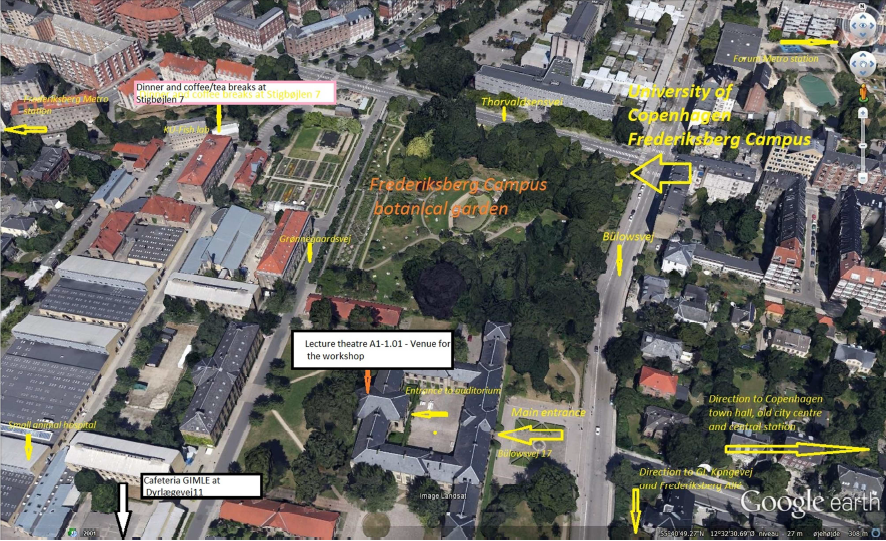
The workshop venue is located 5-7 min walking from the Frederiksberg Metro station which
can be reached from the Copenhagen airport by a direct line (11 stops and approximately 25
min).
Please find the workshop location on the map below.

 map

ParaFishControl LinkedIN Group

ParaFishControl is now on LinkedIn!

Join our LinkedIn group to follow the latest project news, interact and expand your professional network.