NEW ParaFishControl article "Blood feast: exploring the erythrocyte‐feeding behavior of the myxozoan Sphaerospora molnari"
Aims: As the most abundant cell population in the blood, erythrocytes represent an attractive source of nutrients and a protective niche to a number of pathogens. Previously, we observed the attachment of the myxozoan parasite Sphaerospora molnari to erythrocytes of its host, common carp (Cyprinus carpio), raising a number of questions about the nature of this interaction. Methods and results: We elucidated the impact of S molnari on the number of erythrocytes in healthy and immunocompromised fish, over a period of 6 weeks. While we observed only a mild decrease in RBC numbers in healthy individuals, we witnessed gradual and finally severe haemolytic anaemia in immunosuppressed fish. Accompanying this overt loss was increased erythropoiesis as represented by an increase of erythroblasts in the blood. In vitro, we demonstrated the uptake of host proteins from CFSE‐labelled erythrocytes, ultimately inducing death of host RBCs, likely for nutrient gain of the parasite. Nevertheless, the results do not exclude a possible role of erythrocyte‐derived proteins in immune evasion. Conclusion: Overall, the obtained data provide first evidence for the previously unknown appetite of myxozoan parasites for host erythrocytes and create an important framework for future investigations into the molecular mechanisms underlining this interaction.
NEW ParaFishControl article "Differential survival of 3rd stage larvae of Contracaecum rudolphii type B infecting common bream (Abramis brama) and common carp (Cyprinus carpio)"
The main fish host reaction to an infection with third stage anisakid nematode larvae is a response in which host immune cells (macrophages, granulocytes, lymphocytes) in affected internal organs initially are attracted to the parasite whereafter fibroblasts may enclose the parasite forming granuloma. Generally, the reaction is non-lethal to the parasite which may survive for years in the fish host retaining infectivity to the final host. This may also apply for the anisakid nematode Contracaecum rudolphii (having the adult stage in cormorants, using copepods as first intermediate/paratenic host and zooplankton feeding fish as paratenic hosts). The present study has shown that most Contracaecum rudolphii larvae survive in bream (Abramis brama) (from Lake Balaton, Hungary) whereas the majority of the nematode larvae die in Cyprinus carpio (from Lake Hévíz, directly connected to Lake Balaton). Both cyprinid host species interacted with the nematode larvae through establishing a marked cellular encapsulation around them but with different effects. The differential survival in common carp and bream may theoretically be explained by ecological factors, such as the environmental temperature which either directly or indirectly affect the development of nematode larvae, and/or intrinsic host factors, such as differential immune responses and host genetics.
NEW ParaFishControl article "Paralogs of Common Carp Granulocyte Colony-Stimulating Factor (G-CSF) Have Different Functions Regarding Development, Trafficking and Activation of Neutrophils"
Mammalian granulocyte colony-stimulating factor (G-CSF; CSF3) is a primary cytokine that promotes the development, mobilization, and activation of neutrophils and their precursors. Teleosts have been reported to possess two paralogs as a likely result of the teleost-wide whole genome duplication (WGD) event, but functional divergence of G-CSF paralogs remains poorly understood. Common carp are an allotetraploid species owing to an additional WGD event in the carp lineage and here, we report on genomic synteny, sequence similarity, and phylogeny of four common carp G-CSF paralogs (g-csfa1 and g-csfa2; g-csfb1 and g-csfb2). G-csfa1 and g-csfa2 show differential and relatively high gene expression levels, while g-csfb1 and g-csfb2 show low basal gene expression levels in most tissues. All paralogs are expressed higher in macrophages than in other leukocyte sub-types and are highly up-regulated by treatment of macrophages with mitogens. Recombinant G-CSFa1 and G-CSFb1 both promoted the proliferation of kidney hematopoietic cells, while only G-CSFb1 induced the differentiation of kidney cells along the neutrophil-lineage. Colony-forming unit assays revealed that G-CSFb1 alone stimulates the formation of CFU-G colonies from head- and trunk-kidney whereas the combination of G-CSFa1 and G-CSFb1 stimulates the formation of both CFU-G and CFU-GM colonies. Recombinant G-CSFa1 and G-CSFb1 also exhibit chemotactic activity against kidney neutrophils and up-regulation of cxcr1 mRNA expression was highest in neutrophils after G-CSFb1 stimulation. Furthermore, G-CSFb1 more than G-CSFa1 induced priming of kidney neutrophils through up-regulation of a NADPH-oxidase component p47phox. In vivo administration of G-CSF paralogs increased the number of circulating blood neutrophils of carp. Our findings demonstrate that gene duplications in teleosts can lead to functional divergence between paralogs and shed light on the sub-functionalization of G-CSF paralogs in cyprinid fish.
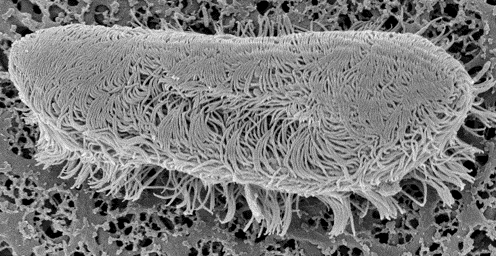
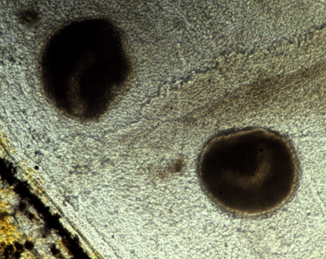
Ichthyophthirius multifiliis (Figure 1) is a freshwater parasite able to infect all freshwater fish tested so far. It causes problems both in flow-through systems and in recirculated systems. Infection causes a disease commonly referred to as white spot disease due to the macroscopically visible trophonts in the skin and fins (Figure 2). It can survive in a temperature range from 1 to 30 °C but, as a thermophilic species, it needs temperatures above 15 °C to propagate fast and efficiently.
Figure 1: Scanning electron microscope image of Ichthyophthirius multifiliis (Photo: Ole S. Møller, University of Copenhagen)
The main species affected in European aquaculture are rainbow trout, Atlantic salmon, perch, pikeperch, European eel, common carp, and European catfish. The infection has long-been considered one of the worst parasitic diseases in these species, especially where earth pond systems are used for culture. Disease risk is growing due to the increasing use of recirculation systems in which infective parasitic stages become continuously recirculated. This can cause a major increase in the level of fish exposure to the parasite.
I. multifiliis is a protozoan parasite, meaning that it is single-celled. It is covered with numerous hair-like cilia, firmly attached to its external cell membrane and belongs to the taxonomic group termed Ciliophora (organisms carrying cilia). The beating of these cilia allow the parasite to move and swim. The parasite has a characteristic horseshoe shaped nucleus and several micronuclei. The genus comprises only one species and it has its own family, Ichthyophthiriidae, which also includes its marine counterpart Cryptocaryon irritans (which is strictly marine and needs salinities near 30 ppt).
Figure 2: Trophonts of Ichthyophthirius multifiliis (diameter 300 μm) in the epidermis of a rainbow trout tail fin (light microscopy with subillumination). The horseshoe-shaped macronucleus is visible. (Photo: Kurt Buchman, University of Copenhagen)
Many other parasites are relatively specific when they choose their host species, but I. multifiliis is not specific in its host choice and can infect all freshwater fish species tested so far. The life cycle of the parasite is direct – it can be transmitted from fish to fish. It includes a trophont stage residing in the fish surface (gill epithelia, skin and fin epidermis). This is the feeding stage, which continuously ingests cellular debris and live host cells in its epidermal location, enabling the parasite to grow rapidly over a short time, depending on temperature.
Due to the occurrence and impact of I. multifiliis in freshwater fish farm systems worldwide, considerable research efforts are being conducted in laboratories spanning Australasia, Asia, Europe and the Americas. New drugs and herbal extracts are being tested for their impact on various stages of the parasite.
In ParaFishControl, a series of control methods have been explored. The parasite can be propagated in the laboratory – most successfully in hosts (in vivo) but cell cultures can support part of the life cycle (in vitro). Experimental vaccines are being tested and have shown promises for future control. Surfactants (with a high parasiticidal effect) from naturally occurring bacteria such as Pseudomonas are being explored and prepared for market. Herbal extracts have been demonstrated to stimulate immune responses in host fish (and thereby partly inhibit development of the trophont) such as rainbow trout. Together, these approaches can be applied for integrated control of I. multifiliis infections in aquacultured fish. Due to the development of aquaculture systems, and their effect on the life cycle and pathogenicity of the parasite, continued research is needed in order to secure control of this parasitosis in the future.
ParaFishControl results presented at international conferences
ParaFishControl partners have been sharing the project results with other scientist and industry representatives in well-known aquaculture related events.
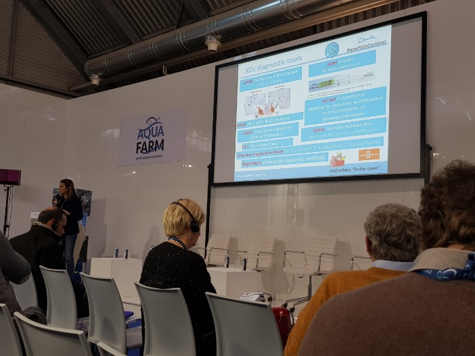
Aquafarm 2020 19-20 February 2020, Pordenone, Italy
Aquafarm 2020 is an annual aquaculture event, now in its fourth year. Our ParaFishControl partners have been busy this year promoting the project results among the event participants.
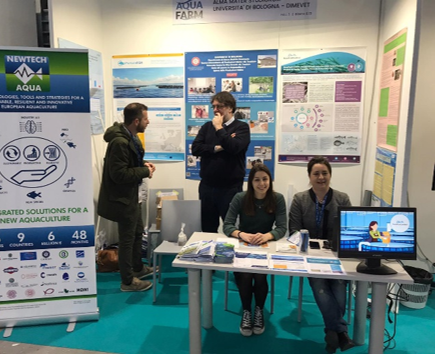
Prof Maria Letizia Fioravanti presented the ParaFishControl Key Exploitable Results at AquaFarm2020Our partners from the University of Bologna at their stand in AquaFarm2020. ParaFishControl project poster and videos were showcased at the stand
Aquaculture Advisory Council Working Groups and General Assembly Meetings Brussels, Belgium, 5 February 2020
The Aquaculture Advisory Council (AAC) was established in late 2016 under the framework of the Common Fisheries Policy. The main objective of this stakeholder-led organisation is to provide the European institutions and Member States with recommendations and advice on issues related to the sustainable development of the sector. The AAC is composed of three working groups covering finfish, shellfish, and horizontal issues, a General Assembly and an Executive Committee. The Council includes representatives from industry and other stakeholders, with a 60% – 40% allocation of the seats in the General Assembly and the Executive Committee.
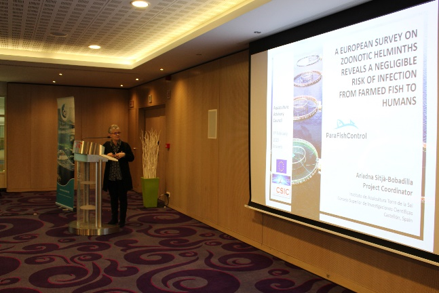
On 5 February, the AAC hosted the Working Groups and General Assembly Meetings in Brussels, Belgium. Upon request of the AAC Working Group 1, ParaFishControl project coordinator, Dr Ariadna Sitja-Bobadilla, presented the results of work package 7 that dealt with fish product safety.
The presentation was focused on the outcome of tasks 7.1 and 7.2; zero detection of zoonotic helminths in all the fish species analysed in the 2016-2018 survey (European sea bass, gilthead sea bream, turbot, rainbow trout, Atlantic salmon and common carp), covering 10,813 fish in total, including runts. Currently freezing treatment is mandatory for fish products intended to be consumed raw or undercooked (with the exception of Atlantic salmon), following the Commission regulation (EU) No 1276/2011.
The results of the ParaFishControl survey demonstrated a negligible risk of transmitting zoonotic helminths from these fish species to humans. This is excellent news for European Aquaculture, and a demonstration of its quality and safety. Therefore, on behalf of ParaFishControl, Dr Sitja-Bobadilla recommended for the AAC to take further steps to obtain an updated Scientific Opinion from the Panel on Biological Hazards of the European Food Safety Authority.
Dr Ariadna Sitjà-Bobabilla explains the ParaFishControl project findings at the ACC Working Group 1 meeting
XXV Italian Society of Fish Pathology (S.I.P.I.) National Congress Gaeta, Italy, 10-12 October 2019
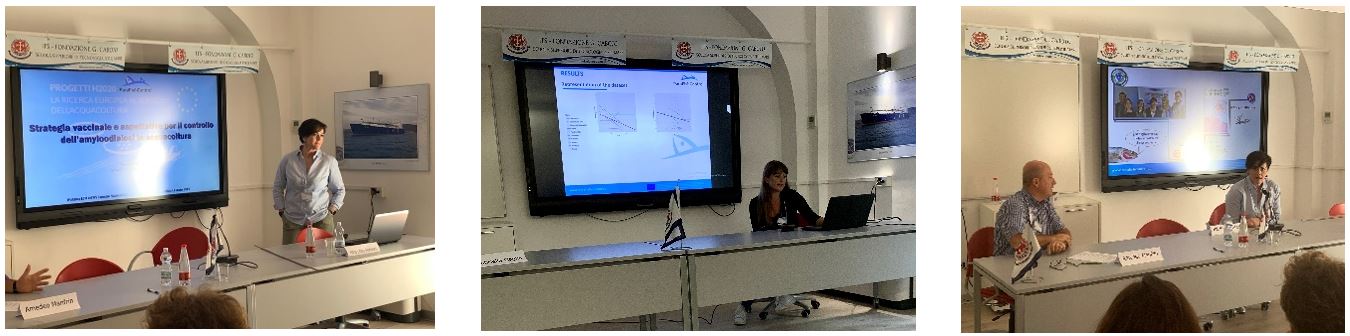
In October, the Italian Society of Fish Pathology (S.I.P.I.) hosted their 25th National Congress in Gaeta, Italy. The meeting included several scientific sessions where ParaFishControl partners presented the latest results obtained within the project. The event also included a specific workshop, “H2020 projects: Applied Research for Aquaculture”, focusing on the most relevant results for the aquaculture industry from the EU funded projects ParaFishControl, PerformFISH and MedAID. The full event programme can be consulted here.
ParaFishControl partners from the University of Bologna and the University of Udine presenting the project results at the workshop “H2020 projects: Applied Research for Aquaculture”
Aquaculture Europe 2019 Berlin, Germany, 7-10 October 2019
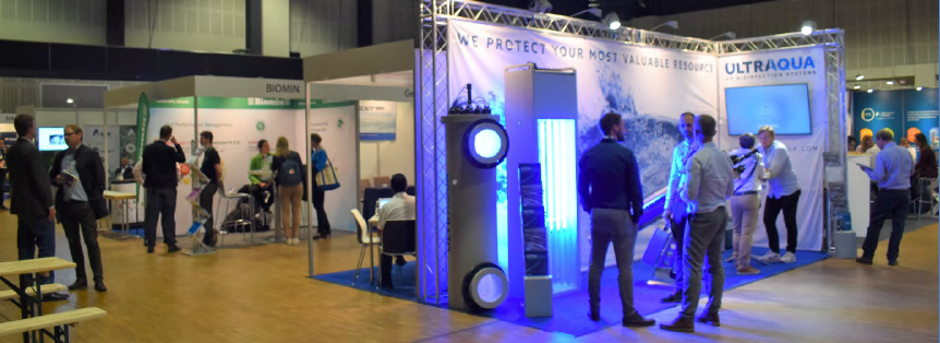
GROWING from WATER was the theme for this year’s Aquaculture Europe (AE2019) conference in Germany. This event included technical sessions and workshops as well as a trade show exhibition.
ParaFishControl partners participated in the technical sessions, providing an overview of the latest results of the project, including the survey that demonstrated the negligible risk of zoonotic parasites in European farmed fish.
19th International Conference on Diseases of Fish and Shellfish Porto, Portugal, 9-12 September 2019
In September, the 19th International Conference on Diseases of Fish and Shellfish (EAFP 2019) was held at the Alfândega Congress Centre in Porto, Portugal. The event hosted scientific and technical sessions consisting of poster presentations, invited talks, keynotes, oral presentations, workshops and an EAFP General Assembly. The ParaFishControl partners were kept busy throughout the conference, presenting their work from the project across multiple scientific and technical sessions.
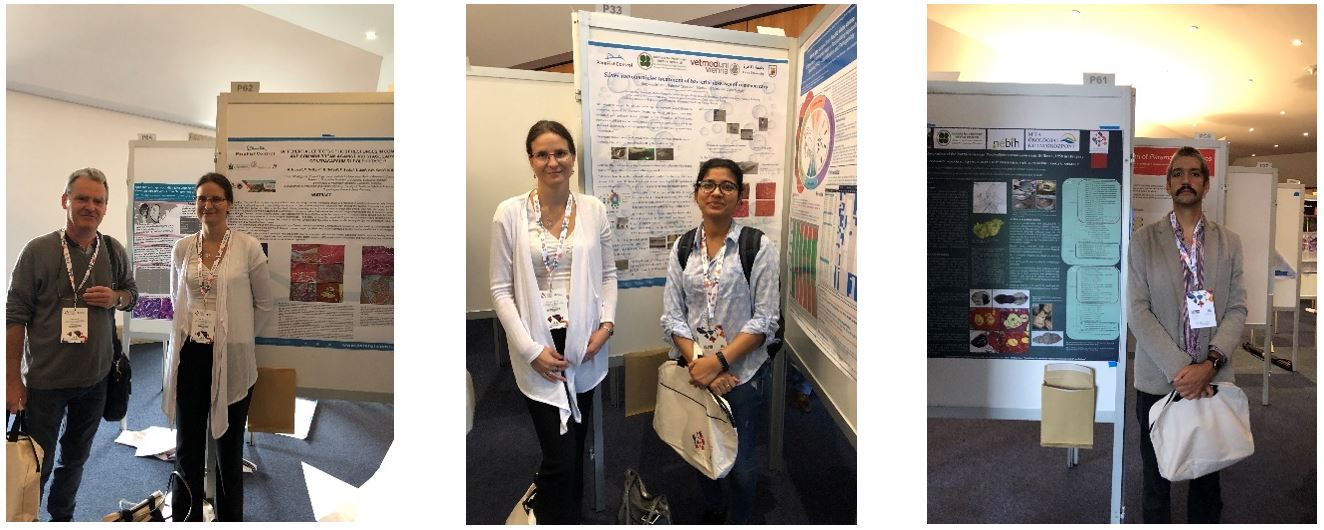
Our partners from the Parasitology Research Team of the Institute for Veterinary Medical Research, Centre for Agricultural Research, with their posters at EAFP 2019
ParaFishControl 3rd Annual Meeting 2019 Budapest, Hungary, 5-7 March 2019
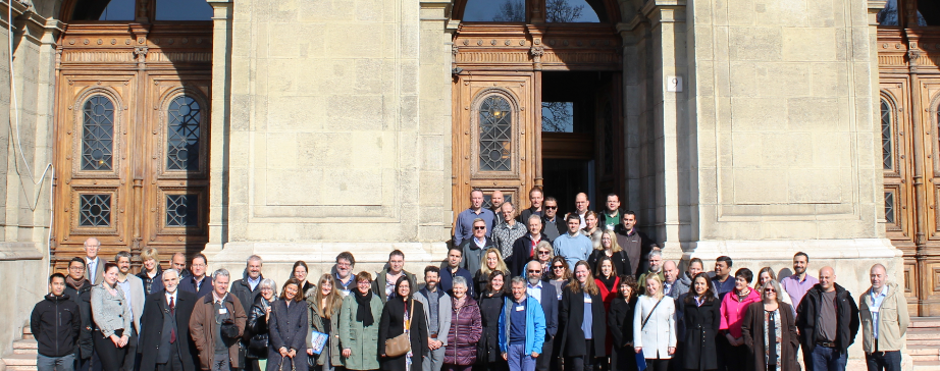
We held a successful ParaFishControl Annual Meeting in Budapest, Hungary. All project partners attended this meeting to present the latest results of ParaFishControl and to plan the next steps for the coming months.
Group photo at the entrance of the main building of the Hungarian Academy of Sciences, MTA