ParaFishControl trains the next generation researchers

ParaFishControl is committed to training the next generation of aquaculture pathogen researchers. With this in mind, partners continuously train master’s degree students on the new tools and techniques developed within the project.

Dr Michela Massimo
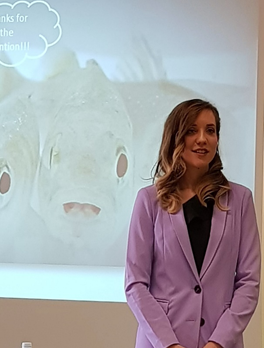
During the last three years, Michela had the opportunity to develop her doctoral thesis within the Horizon 2020 project ParaFishControl. Her PhD research activities were based on studying the ectoparasite protozoan Amyloodinium ocellatum with a particular attention to deepening the understanding of the mechanisms by which the dinoflagellate interacts with its host and how the host responds to it. For this reason, studies were conducted on the protozoan and on fish (UNIUD group selected the European sea bass as target host) also by monitoring spontaneous outbreak episodes and carrying out experimental infections. Contemporarily, laboratory analyses (i.e. ELISA, immunohistochemistry, histology, respiratory burst, cytotoxicity tests, in vitro motility tests) were performed to better explore the host-parasite relationship and to develop innovative treatments against amyloodiniosis. Furthermore, Michela had the opportunity to spend some months at the Institute of Aquaculture of the University of Stirling (Uos), thanks to the funding provided by the Horizon 2020 project AQUAEXCEL. At the UoS she learned how to perform the fluorescent in situ hybridization technique and to develop fluorescent staining protocols for confocal microscopy evaluations. 

On the 26th of February 2019 she concluded the PhD in Science and Agricultural Biotechnology with the thesis entitled “New perspectives in the control of Amyloodinium ocellatum infection in reared sea bass (Dicentrarchus labrax)”.

Alberto Edo
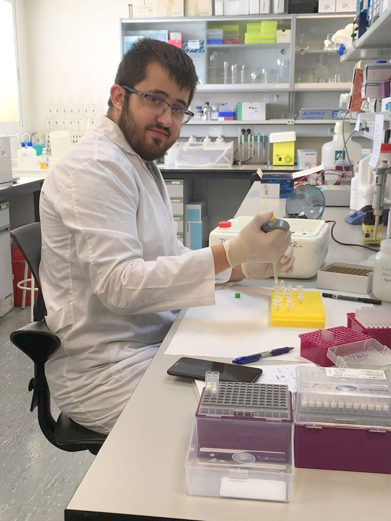
Alberto Edo recently received his master’s degree in Aquaculture at the University of Valencia, Spain. He completed his master’s thesis at the Institute of Aquaculture Torre de la Sal (IATS) within the framework of the ParaFishControl project.

Supervised by Dr Ariadna Sitjà Bobadilla and Dr Carla Piazzon from the Institute of Aquaculture Torre de la Sal and in collaboration with Dr Ivona Mladineo from Institut za Oceanografiju i Ribarstvo, Alberto’s thesis focused on the study of the gene expression of European sea bass parasitized with the hematophagous parasite Ceratothoa oestroides. He used PCR-Array to study the expression of 23 selected genes in tongue, spleen, liver and head kidney of infected and uninfected sea bass. The results showed that inflammation, anaemia and growth markers are being regulated both, locally and systemically, upon C. oestroides infection. This is the first study characterizing the transcriptional response of European sea bass against this parasite and sets the basis for future studies dealing with this disease in aquaculture. Alberto defended his master’s thesis in January 2020 and was awarded the highest qualification. 

 Gabriela González
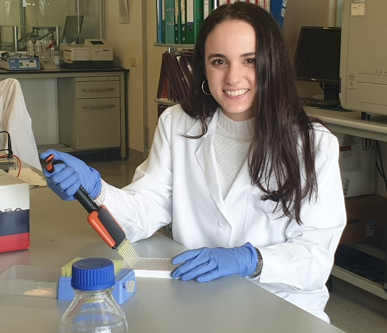
Gabriela González recently completed her master’s degree in Industrial Biotechnology at the Universidad Complutense de Madrid, Spain. Conducted at Eurofins Ingenasa under the supervision of Dr Carmen Galán and Dr Paloma Rueda, Gabriela’s objective was to develop novel immunodiagnostic tools for different viral and parasitic diseases of interest in aquaculture.

One of her focal pathogens was the parasite Enteromyxum leei, addressed within the framework of the ParaFishControl project, in collaboration with Dr Oswaldo Palenzuela’s group at the Institute of Aquaculture Torre de la Sal. Gabriela analysed the expression of the ELTG1 protein, one of the putative diagnostic targets selected after the transcriptomic analysis of the parasite E. leei. She performed the expression of the antigen in different heterologous systems, obtaining a good yield, purity and concentration for its use as an immunogen. Derived monoclonal antibodies are now being selected and will be assessed for their use in rapid immunodiagnostic tests. Gabriela will defend her thesis in March 2020.
Great collaboration and exchange between ParaFishControl partners

ParaFishControl project relies upon close collaboration between partners. Working together supports the European aquaculture business to address many challenges caused by parasites.

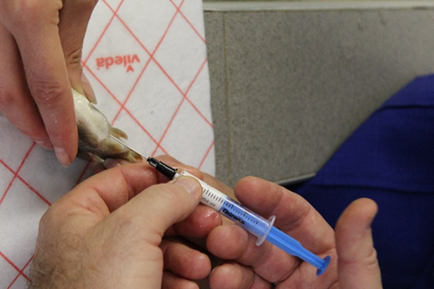
Vaccines against parasites have been efficacy tested in consortium within ParaFishControl. An example of this cooperation is related to the development of a recombinant vaccine. Following a series of bioinformatic investigations our German partner, W42 produced a recombinant vaccine against Ichthyophthirius multifiliis

Figure 1: Vaccination of carp (Photo: Fish Pathology and Parasitology Team, IVMR CAR – former MTA)

This vaccine was tested in Hungary for common carp by the Fish Pathology and Parasitology Research Team of the Institute for Veterinary Medical Research, Centre for Agricultural Research, (former Hungarian Academy of Sciences – MTA) and for rainbow trout in Denmark by the University of Copenhagen (KU) and the Technical University of Denmark (DTU). This was a fine demonstration of the integrated ParaFishControl team and the infrastructure with easy communication within the European community. Samples are still being processed so the results from the trials will appear later.

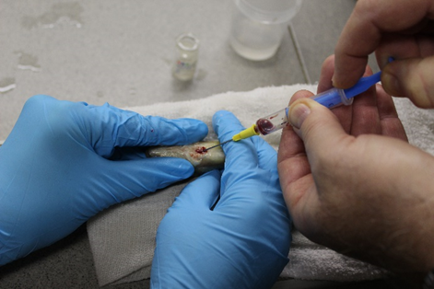
Fish Pathology and Parasitology Team sampling blood from carp after vaccination (Photo: Fish Pathology and Parasitology Team, IVMR CAR – former MTA)

True collaborations in our EU networks – crossing over from ideas via production of prototypes to final tests in different host species – have been rewarding. Although we have not achieved the full control of parasitic infections based on vaccines, our fundamental knowledge of fish immunology and parasite-host interactions has been expanded significantly. The results have prepared the ground for future fish parasitological studies.

The rich treasure box of new approaches developed within ParaFishControl has enabled the University of Copenhagen to continue running a new programme for selective breeding of parasite resistant fish. This will be complemented by a conference on genetic selection and breeding programmes in autumn 2020 and an International Congress for Parasitology in 2022, both held at the University of Copenhagen. Fish parasitology will be featured at these events as a key topic for the future.

New discoveries in the work towards a vaccine against Sphaerospora molnari

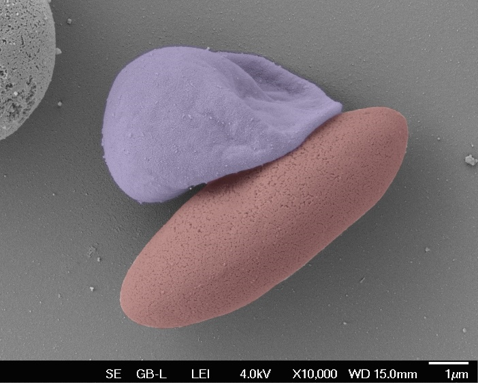
As part of ParaFishControl Work Package 1 (Host-parasite interactions), the Biology Centre of the Czech Academy of Sciences (BCAS) studies host exploitation of common carp by the myxozoan, S. molnari. This parasite’s blood stages are highly motile and multiply rapidly in the blood of carp, requiring substantial amounts of energy. We observed the attachment of S. molnari to carp erythrocytes and their gnawing on the host cells (Figure 1).

Figure 1: S. molnari blood stage (purple) gnawing on host red blood cell (red) (Photo: Astrid Holzer)

We confirmed the transfer of proteins from the host cells to parasite and demonstrated that this carp parasite can cause hemolytic anemia, significantly reducing the number of red blood cells in the host (Figure 2), which are urgently required for oxygen transport. This is of special importance for Central European common carp cultures in the summer months, where high temperatures, algal blooms and deteriorated water quality reduce oxygen levels in the ponds and can cause significant mortalities in carp stocks. We have recently discovered the main proteolytic enzyme that S. molnari uses for the degradation of host proteins, and consider it an important target for future vaccination development.

Figure 2: Reduction of hematocrit (compressed red blood cell volume) in carp blood after just 28 days of infection with S. molnari in comparison with healthy, uninfected carp blood (Photo: Astrid Holzer)

ParaFishControl demonstrates the effectivity of feed additives against enteromyxosis in gilthead sea bream

Enteromyxosis in gilthead sea bream (Sparus aurata) is an infection caused by Enteromyxum leei. It produces anorexia, weight loss, severe epaxial muscle atrophy and, eventually, death. The main economic impact of infection on gilthead sea bream aquaculture arises from arrested growth and difficulties in reaching commercial size. Epizootic outbreaks can also occur under some conditions. The lack of effective anti-parasitic therapies in Mediterranean aquaculture has stimulated the search for natural feed additives, which can be incorporated into functional feeds, aiming to minimise the impact of parasitic outbreaks on productivity.

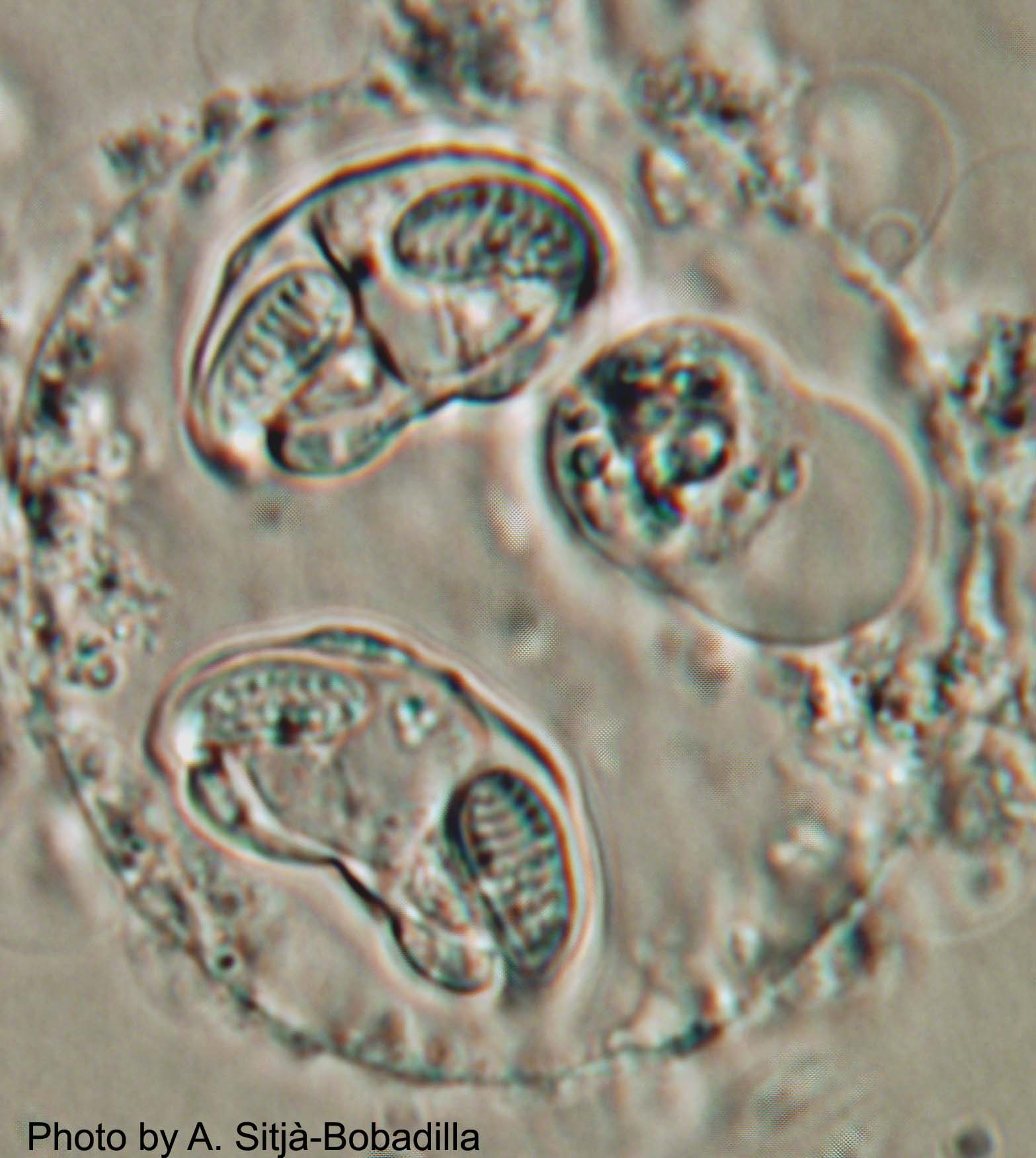
Enteromyxum leei (Photo: Ariadna Sitjà-Bobadilla)

ParaFishControl researchers have studied the effect of a commercially available health-promoting feed additive, (SANACORE® GM) at two different doses in a laboratory-controlled population challenged with E. leei. The experiment showed that supplemented diets mitigated the anorexia and growth arrestment in the hosts, and that this mitigation was maximised in the highest dose group. Treated groups also presented lower prevalence of infection and a lower parasite load. Although the decrease in parasite levels was similar with both doses of additive tested, the pathogeny of the infection was mostly suppressed with the higher dose, while only mitigated with the lower dose.

This study shows that supplemented diets can be used as an alternative treatment to suppress the pathogenicity of E. leei.

More information: https://www.int-res.com/articles/dao_oa/d138p111.pdf

Providing expert services to the European aquaculture industry: Spotlight on Vertebrate Antibodies

Here we interview the team from Scotland-based, ParaFishControl partner, Vertebrate Antibodies (https://vertebrateantibodies.com/), to learn more about their products and services for the aquaculture sector.

From left to right: Dr Tiehui Wang (Director of Biologicals), Dr YehFang Hu (Research Fellow of Bioanalytical Assay Development) and Dr Abdo Alnabulsi (KTP Associate – Antibody Production & AI Development)

Could you tell us a bit about Vertebrate Antibodies (VAL)?

VAL is an emerging biotech company, founded by scientists back in late 2011. Initially, we focused on developing monoclonal antibodies to veterinary species for basic research. Through building our expertise and establishing our reputation across different sectors, we have expanded our services to encompass additional technologies including recombinant protein production platform, IHC validation and discovery service, software development and, most recently, branching out to the artificial intelligence domain. We see ourselves as an inventory company, able to utilise our technologies and resources to provide novel products and solutions to multiple sectors.

Who are your target clients and what services do you offer them?

In the aquaculture sector, our main clients are scientists working in fish pathology, disease diagnostics and disease prevention by immune stimulation and vaccination. We supply antibodies and provide custom antibody services to the research community. We also supply novel biologicals, including bioactive cytokines, antimicrobial peptides and immune stimulants, and provide custom recombinant protein services. These antibodies and novel biologicals are essential to advance our understanding of fish-pathogen interactions and pave the way for future discoveries.

In addition, we provide services to vaccine and feed companies, including monitoring tools to assess the efficacy of vaccines and feed formulations. We offer solutions of adjuvants and immunostimulants which can enhance vaccine performance and boost fish immune systems. We also offer innovative solutions through access to Artificial Intelligence software that predicts vaccine and diagnostic targets. This software has machine learning capabilities based on incorporated algorithms that improve the prediction accuracy of therapeutic options. Furthermore, we offer services directly to fish farmers by providing the monitoring tools they seek to chart fish health, assess infection, evaluate vaccine efficacy, and new diet formulations. This information empowers fish farmers to select the best products and strategies.

Why and how did you get involved in ParaFishControl?

The project coordinator, Dr Ariadna Sitjà-Bobadilla spotted the value that VAL technology could offer ParaFishControl, had faith in our team, and invited us to become project partner. We were delighted to take part in this fantastic project. It is a chance for us to contribute to important research and an opportunity to showcase our company, opening up new market opportunities that would otherwise be inaccessible.

What has been your role in this project?

We generated antibodies towards parasite antigens to be used as probes to improve existing diagnostic methods. The antibodies can also be employed for research purposes to further enhance understanding of pathogen-host interactions and for passive immunisation by neutralising parasitic-virulent factors.

How would you say ParaFishControl has contributed to the growth of your company?

The contribution of the ParaFishControl project to our company was primarily knowledge-based rather than financial. The project incorporated leading research institutes and industry biotechnology companies in the aquaculture sector. By being a partner, we were able to absorb a great deal of knowledge and expertise, recognize bottlenecks and challenges facing the sector. This new knowledge enabled our team to develop innovative solutions and tools for the prevention, control and mitigation of the most harmful parasitic species affecting farmed fish species. From a practical perspective, thanks to the new services that we have developed through ParaFishControl, we were able to grow from 1.5 staff members to 7!

Being part of a prestigious EU Horizon 2020 grant also generates great marketing and publicity potential for a SME like ours. We used this experience to create additional strategic alliances and partnerships outside of ParaFishControl.

Is there anything else you would like to add?

We would like to thank all partners in the ParaFishControl consortium for this fantastic experience, and the EU for funding such an overarching project. Even though the project is about to end, we are sure that our collaborations with all the partners will continue. We hope that new consortia will be created after this project to build upon the solid foundations laid by ParaFishControl to continue improving the sustainability and competitiveness of the European aquaculture industry.

Download pdf.