New treatment tackles costly parasitic disease for freshwater farmed and ornamental fish

Press release: 06 February 2020

A new treatment has been developed for Ichthyophthirius multifiliis, a parasite commonly found in freshwater fish which could save the ornamental and farmed fish industries billions of euro per year.

A compound was first identified by researchers from the EU-funded ParaFishControl project, which examines fish-parasite interactions in aquaculture. Its effectiveness in treating certain parasitic diseases led researchers to submit a patent for the compound.

The treatment was first tested on the I. multifiliis parasite, which causes white spot disease in a range of freshwater fish. The disease is highly damaging for both the ornamental and farmed fish industries due to its high mortality rate.
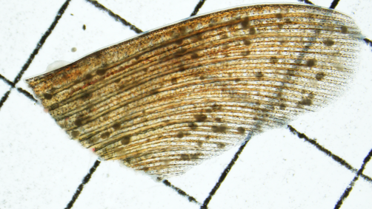
Ichthyophthirius multifiliis trophonts on a fin of common carp (Photo: C. Székely)

A new company, Sundew, has been founded to further develop and commercialise the compound. The Copenhagen-based SME will facilitate the development of large-scale production and purification of the product, which it has named BIOKOS.

The need for new treatments arose following the ban of malachite green, which was found to be carcinogenic and genotoxic. No other compound to date has been as effective for control of the infection.

Sundew owners are hopeful that BIOKOS will be in high demand in both the aquaculture and ornamental production markets. Aquaculture production alone is valued at over €5 billion per year in the EU.

This new treatment, and many other results originating from the past five years of research within ParaFishControl, will be presented at the project’s Final Conference “Innovative Strategies to Control Parasites in Aquaculture Farms” in Brussels on 11 March 2020. For further information and to register, please visit bit.ly/2veQPVN.

To learn more about ParaFishControl, please visit the website at parafishcontrol.eu, or follow the project on Twitter @ParaFishControl.
Download pdf.

New tool raises awareness of the impact of fish farming practices on parasite presence

Press release: 30 January 2020

A unique tool has been created which helps fish farmers to identify the risk of parasite infection associated with their current farming practices.

The tool, launched by the EU-funded ParaFishControl project, addresses three parasites prevalent in Mediterranean Sea cage aquaculture; Sparicotyle chrysophrii, Enteromyxum leei and Ceratothoa oestroides. Using data from the latest research, consultations with parasite experts and field surveys across 39 Mediterranean cage farms, the tool estimates production gains and losses under different conditions. The model outputs indicate the most effective management strategies for these parasites in terms of site characteristics and husbandry practices. The tool also provides a cost-benefit assessment of various parasite prevention and control measures for aquaculture businesses.

Free to use and fully confidential, the tool is the first of its kind, allowing fish farmers to compare costs of a disease outbreak with those of applying management upgrades. While the tool is representative of Mediterranean cage farming as a whole, developers emphasise that regional differences and disease complexities need to be taken into account. The tool could be adapted for application to other fish parasites and pathogens, by collecting additional structured epidemiological information to underpin the calculations.

The tool is available at openscience.cefas.co.uk/parafish_economic, while the code and metadata can be accessed at data.cefas.co.uk/#/View/20141.

This tool, and many other results originating from the past five years of research within ParaFishControl, will be presented at the project’s Final Conference “Innovative Strategies to Control Parasites in Aquaculture Farms” in Brussels on 11 March 2020. For further information and registration visit https://bit.ly/2veQPVN.

For more information about the project visit parafishcontrol.eu or follow ParaFishControl at twitter.com/parafishcontrol.

Download pdf.

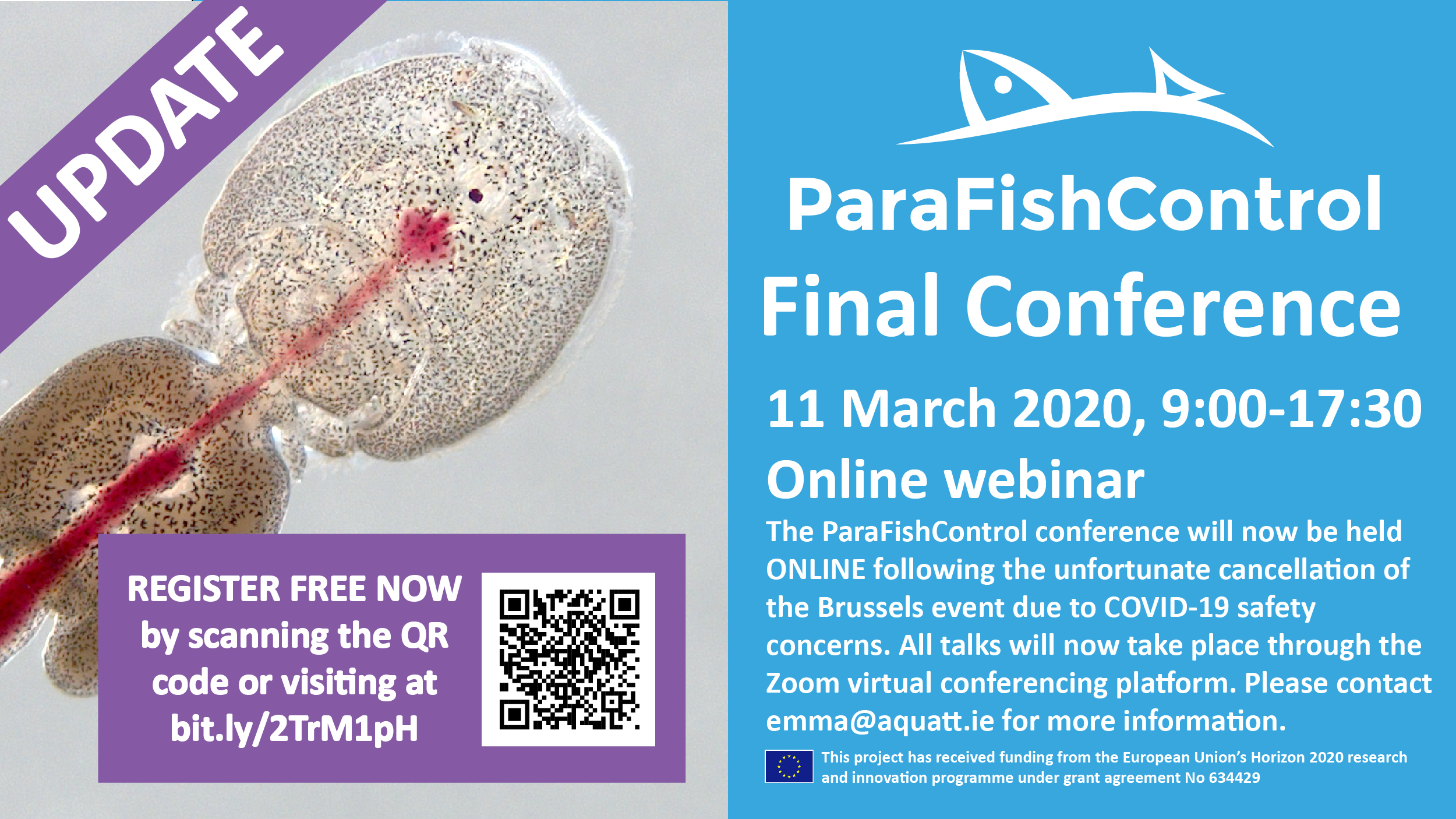
Join us at the ParaFishControl Final Conference "Innovative Strategies to Control Parasites in Aquaculture Farms"

Important notice: The ParaFishControl conference will now be held ONLINE following the unfortunate cancellation of the Brussels event due to Coronavirus safety precautions.

Are you interested in learning more on how to deal with parasites in your aquaculture farm? Do you want to discover new treatments, diagnostic tools and prevention measures to deal with fish parasites?

Join us in our ParaFishControl Final Conference and you will have the opportunity to access to the latest tools and strategies to diagnose, prevent and treat parasitic diseases in farmed fish.

The ParaFishControl Final Conference “Innovative Strategies to Control Parasites in Aquaculture Farms” will be held on-line on the 11th March 2020. Check regularly this page for updated information.

Venue: On-line

Date and time: 11 March 2020, 9:00 am – 17:30 pm CET

Registration: To register, please follow this link: bit.ly/2TrM1ph

Agenda: Click here to download the agenda

Registration is free of charge. Registration is open until the 11th March 2020 at 9.00 am CET.


ParaFishControl Transfers its Results at Aquaculture Europe 2019

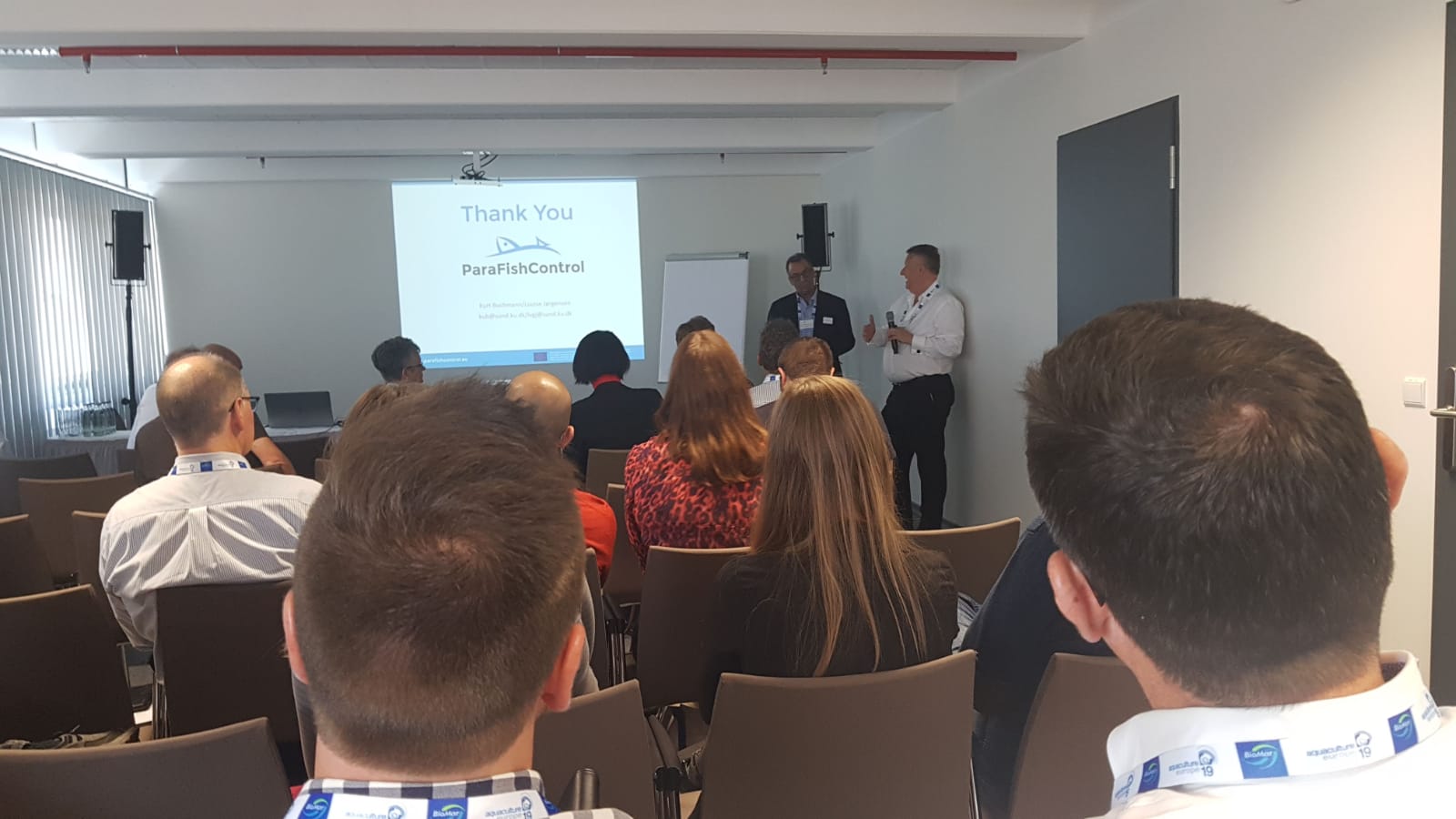
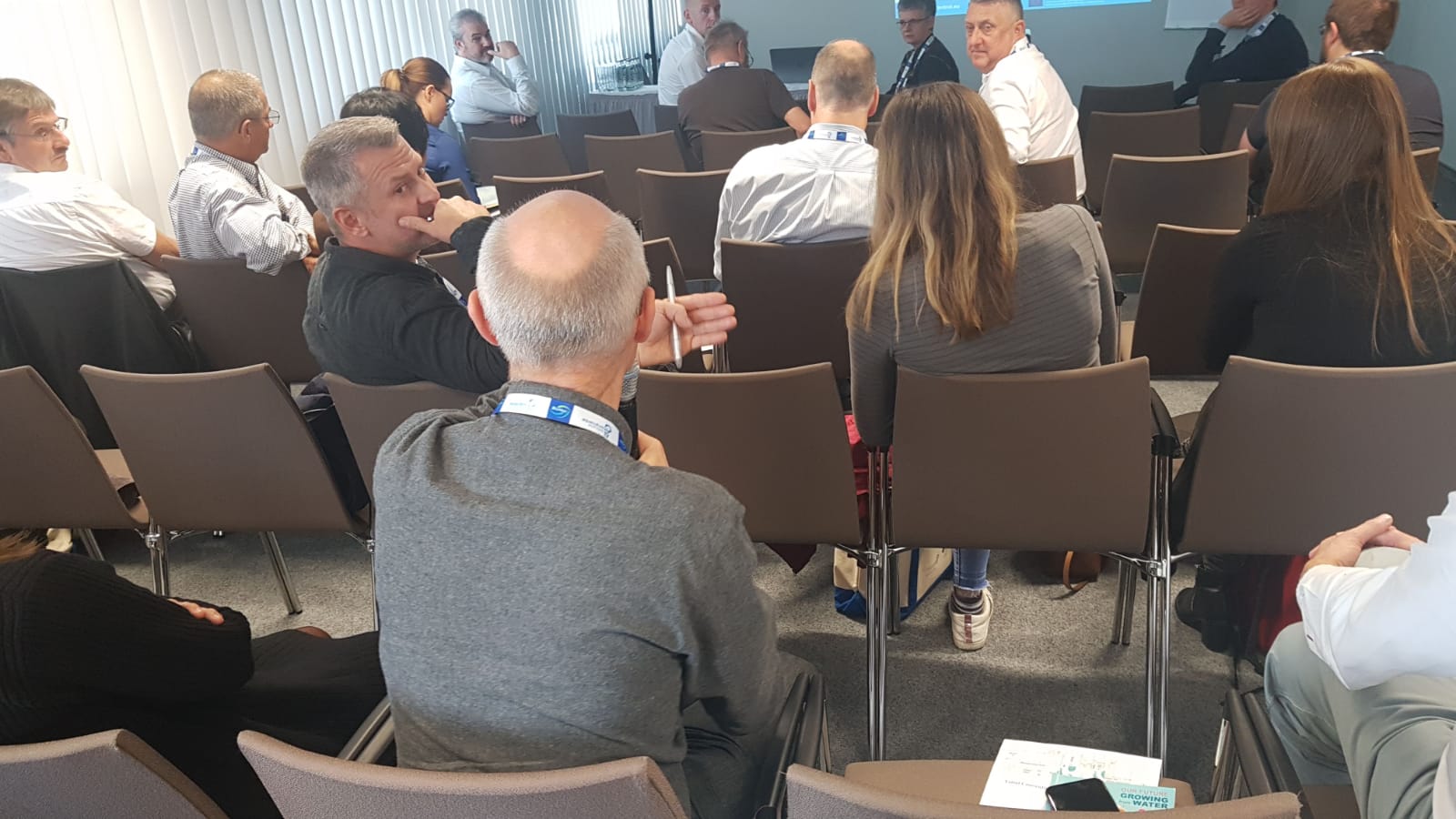
ParaFishControl organised the Workshop “North European Fish Parasite Management Strategies in Aquaculture Farms” at the Aquaculture Europe 2019 conference in Berlin, one of the key events in the calendar for the industry. The event was held on the 9 October 2019.

The workshop was attended by 43 aquaculture experts from industry, research institutions and policy interested in learning more on how to better control parasitic diseases in aquaculture farms. The workshop started with an overview of the economic impact of parasitic diseases on Rainbow Trout, Atlantic salmon and carp. ParaFishControl partners then presented the new tools and techniques developed within the project to diagnose, prevent and treat the most damaging parasites for fresh water and marine farmed species in North Europe (salmon, carp and trout) – Lepeophtheirus salmonis, Tetracapsuloides bryosalmonae, Sphaerospora molnari, Ichthyophthirius multifiliis, Paramoeba perurans and Saprolegnia parasitica as well as zoonotic helminths. 

The open discussion was launched by the ParaFishControl Industry Forum coordinator, Dr Panos Christofilogiannis from AQUARK, who highlighted the industry priorities on the management and impact of parasitic diseases and how the ParaFishControl project is now delivering new tools and techniques to address the industry challenges on this topic. This discussion proved to be a thought-provoking session to round off what was a very exciting event!


The Agenda and the Workshop presentations are available to download below:

Agenda

Session 1 – Setting the scene

 Economic Impact of Parasitic Diseases in Rainbow Trout – Dr Niels Henriksen, Dansk Akvakultur

 Economic Impact of Parasitic Diseases in Atlantic Salmon – Dr Audun Iversen, NOFIMA

 Economic Impact of Parasitic Diseases in Carp – Dr Béla Urbányi, Szent István University

 ParaFishControl Project and Results – Dr Ariadna Sitjà-Bobadilla, ParaFishControl Project Coordinator, IATS-CSIC

Session 2 – Alternative Treatments

 Alternative Treatments for Saprolegnia – Dr Perla Tedesco, University of Bologna

 Biological Control of Ichthyophthiriasis Dr  Louise von Gersdorff Jørgensen, University of Copenhagen, presented by Dr Ariadna Sitjà-Bobadilla, IATS-CSIC

 Health Management Strategies for Cleaner Fish – Dr Niccolo Vendramin, presented by Panos Christofilogiannis, AQUARK

Session 3 – Diagnostics and Prevention

 New Tools for the Diagnosis of the Amoebic Gill Disease (AGD) – Dr Irene Cano, Dr Brian Mulhearn & Dr Richard Paley, CEFAS, presented by Dr Ariadna Sitjà-Bobadilla, CSIC

 Towards an Improved Image of Aquaculture Products Regarding Food Safety – Dr Miguel Ángel Pardo, AZTI, presented by Dr Ariadna Sitjà-Bobadilla, IATS-CSIC

 Vaccine for Ichthyophthirius multifiliis – Dr Louise von Gersdorff Jørgensen, University of Copenhagen, presented by Dr Carla Piazzon, CSIC

 Vaccine for Proliferative Kidney Disease (PKD) – Dr Jason W. Holland, University of Aberdeen, presented by Dr Carla Piazzon, CSIC

Vaccine for Saprolegnia – Dr Kostis Apostolakis, Dr Chris Secombes & Dr Pieter van West presented by Dr Javier Dieguez, CSIC

Vaccine for Sphaerospora molnari – Dr Tomas Korytar, BCAS

Successful ParaFishControl Industry Forum to Improve the Management of Parasitic Diseases in Mediterranean Aquaculture

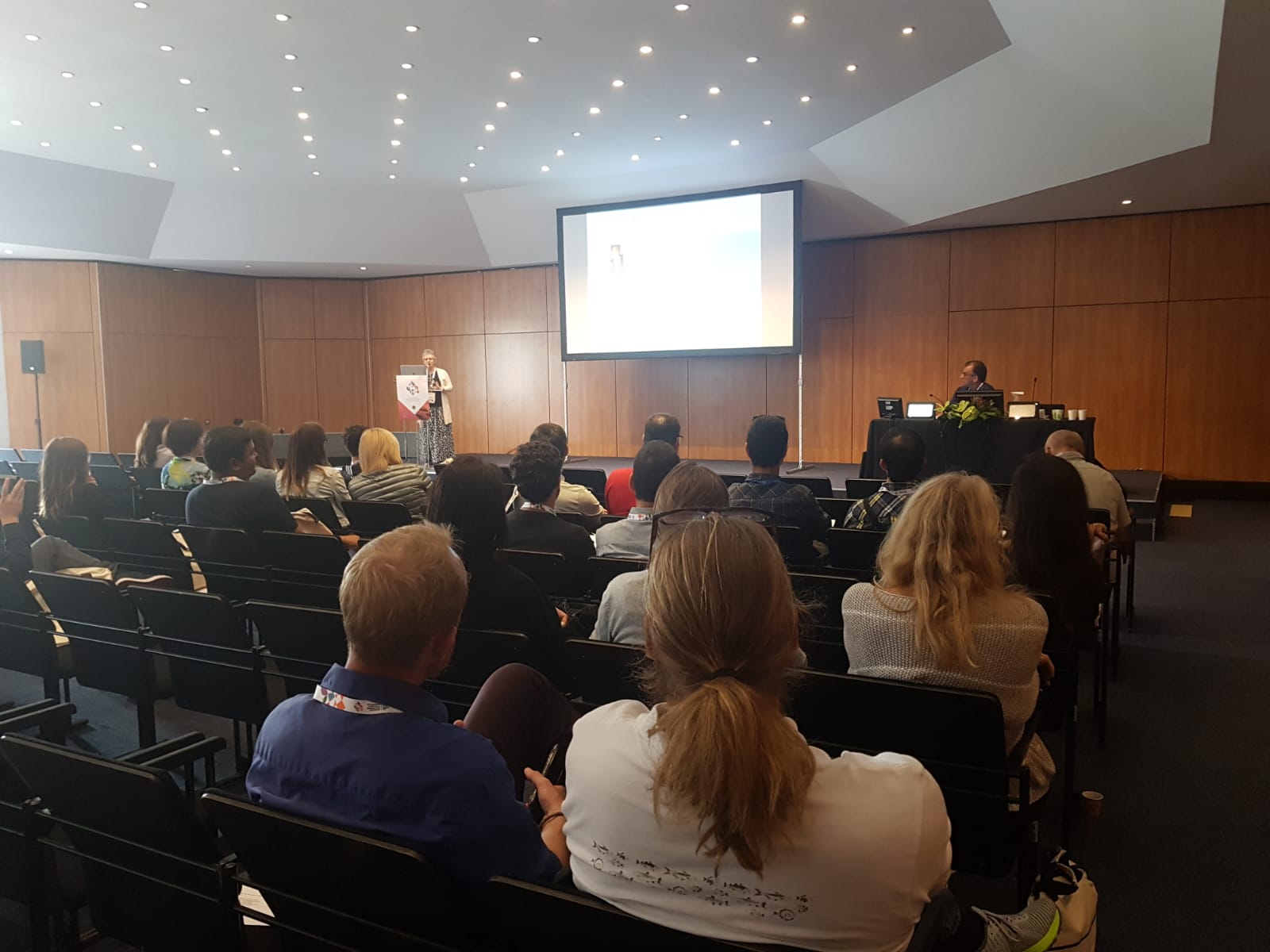
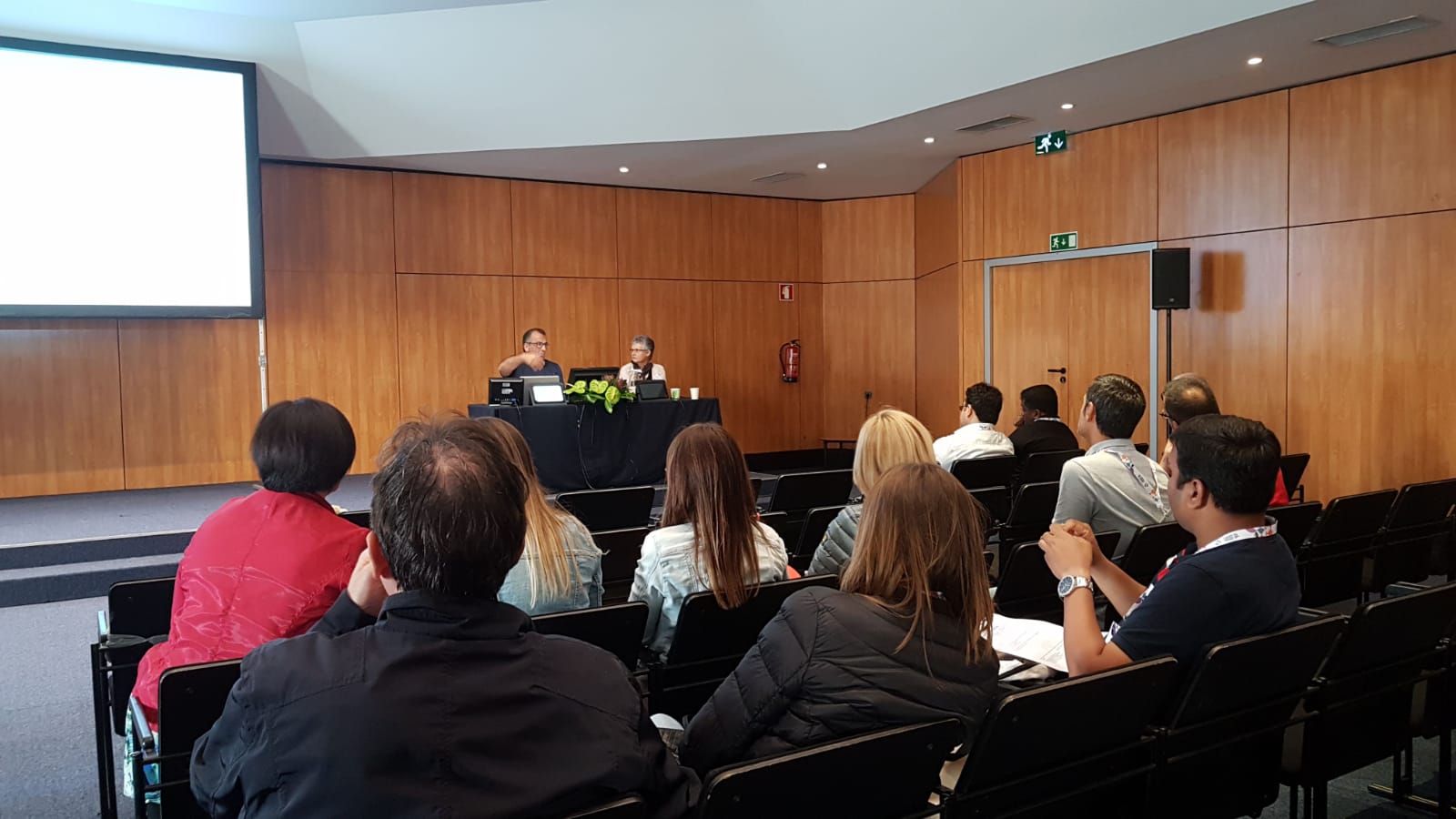
ParaFishControl organised the Industry Forum “Mediterranean Fish Parasite Management Strategies” on the 10th September 2019 at the 19th International Conference on Diseases of Fish and Shellfish that took place in Porto, Portugal, from 9 to 12 September 2019. The industry forum was attended by 59 aquaculture experts coming from industry, research institutions and policy, interested in learning more on how to better control parasitic diseases in Mediterranean aquaculture farms. The event focused on the parasites which have been most damaging to Mediterranean farmed species populations – Amyloodinium ocellatum, Ceratothoa oestroides, Enteromyxum leei, Enteromyxum scophthalmi, Enterospora nucleophila, Philasterides dicentrarchi, and Sparicotyle chrysophrii.

During the industry forum, Alain Le Breton from Vet’au provided an overview of the most prevalent issues related to parasitic diseases in Mediterranean aquaculture farms. ParaFishControl partners presented the new tools and techniques developed within the project to diagnose, prevent and treat these diseases. The event ended with an open discussion with the participants to determine how these solutions could be implemented at farm level. The industry forum provided the attendees with new knowledge to better manage their farms, and greatly reduce population loss in a cost-effective way.


Ariadna Sitjà-Bobadilla providing and overview of the

ParaFishControl project results

 Open discussion with the Industry Forum participants

The Agenda and the Industry Forum presentations are available to download below:

Agenda

Setting the scene

 ParaFishControl Project and Expected Results – Dr Ariadna Sitjà-Bobadilla, ParaFishControl Project Coordinator, IATS-CSIC

 Economic Impact of Parasitic Diseases in Mediterranean Mariculture – Dr Alain Le Breton, Vet’au

Session 1 – Diagnostics

 Towards an improved image of Mediterranean aquaculture products regarding food safety – Dr Andrea Gustinelli, University of Bologna

 New tools for diagnosis of  Enterospora nucleophila – Dr Oswaldo Palenzuela, CSIC

Session 2 – Prevention

 Vaccine for Amyloodinium ocellatum – Dr Paola Beraldo, University of Udine

 Vaccines for Philasterides dicentrarchi – Dr Jesús Lamas, University of Santiago de Compostela, presented by Dr Ariadna Sitjà-Bobadilla, IATS-CSIC

 Economic model for risk factors in Mediterranean farms – Dr Alastair Cook, CEFAS, presented by Dr Ariadna Sitjà-Bobadilla, IATS-CSIC

Session 3 – Alternative Treatments

 New treatments against sparicotylosisDr Ivona Mladineo, IZOR

 Alternative treatments for Ceratothoa oestroides – Dr Ivona Mladineo, IZOR

 Alternative treatments for Amyloodinium ocellatum – Dr Michela Massimo, University of Udine